January 15, 2026 · Vyanika Team
Why We Started With Kabaddi
When we started scoping Vyanika, we looked at a dozen sports where officiating error has a real cost — financial, competitive, and sometimes physical. Kabaddi kept coming back to the top of the list, for reasons that had nothing to do with sentiment and everything to do with the physics of the problem.
The hardest calls happen at the boundary
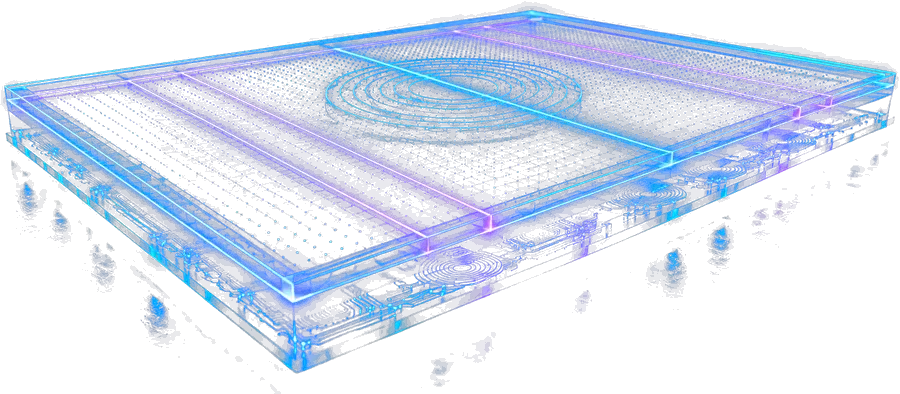
A kabaddi raid is decided by a foot crossing a line while the raider is under physical pressure from up to seven defenders. The margin between a valid touch and a boundary breach is measured in centimetres and milliseconds — exactly the resolution human eyesight struggles with, and exactly the resolution a pressure-sensor grid embedded in the mat is built for.
An underserved sport, ready for precision
Unlike sports with large broadcast-technology budgets, professional Kabaddi leagues have largely relied on human line judges. That gap was our opening: a sport with enormous audience numbers in South Asia, real financial stakes in professional leagues, and no existing camera-based system built specifically for a raiding-and-touch format the way goal-line technology was built for football.
Kabaddi as the proving ground
Smart Kabaddi isn’t the end state — it’s the first full deployment of a sensor platform we intend to bring to wrestling, volleyball, and eventually broadcast and Metaverse applications. Building for Kabaddi first forced us to solve the hardest version of the problem early: high-contact, high-speed, high-stakes, low line-of-sight. Everything we shipped for the mat travels well to every sport we look at next.
We’ll be publishing more on the engineering decisions behind the sensor matrix, our latency budget, and how we’re testing for durability under real match conditions. Follow along.