May 30, 2026 · Vyanika Team
Engineering Mat Durability, Without a Wear Number We Can't Back Up
A sensor system that degrades after a season of real matches is worse than no sensor system at all — it fails exactly when a league has come to depend on it. Durability is a design constraint from day one, not an afterthought. It’s also one of the areas where we’d rather say less than overclaim.
The constraint: invisible to the athlete
We’re targeting a total sensor-and-protective stack of 10mm or less. That number wasn’t chosen for manufacturing convenience — it’s roughly the threshold below which players stop noticing a change in surface friction or footing compared to a standard mat. Every durability decision downstream has to preserve that thinness, and the stack is still working its way through validation.
The stack that protects it
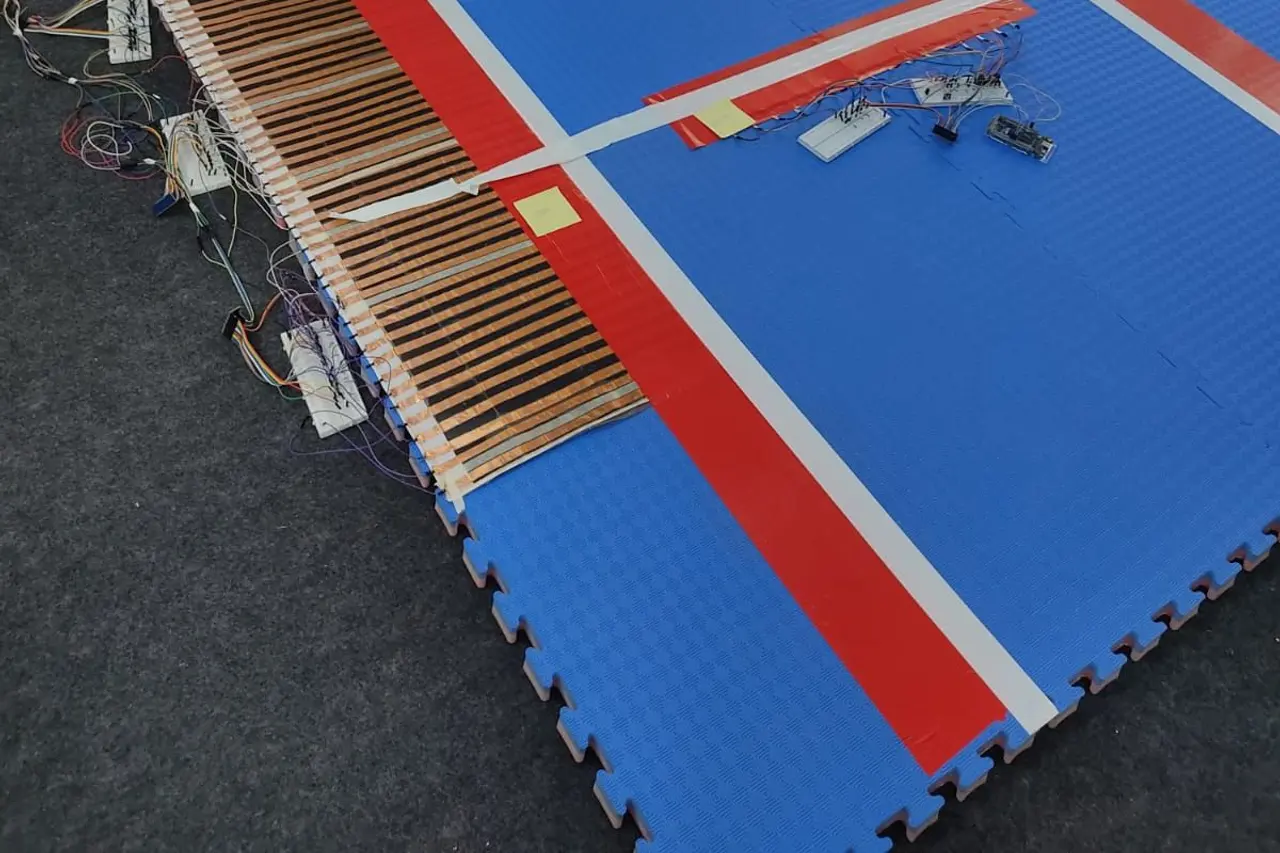
The sensor grid sits embedded beneath a protective layer that absorbs the vast majority of impact energy from a footfall before it reaches the sensing layer itself. The exact material and thickness of that layer are still being selected — too soft blurs the pressure signal, too firm transmits too much shock into the electronics — and we’re not naming a final spec until that selection is done.
Why we’re not quoting a cycle count
We don’t yet have a durability figure we can stand behind, so we’re not publishing one — a made-up number is worse than no number. Long-run cycling validation (the test that would tell us how many footfalls the stack tolerates before it degrades) hasn’t run yet. Rather than guess, we’ve leaned on a design that doesn’t depend on hitting a specific wear rating in the first place.
The design answer: replace, don’t just endure
Instead of engineering a single stack to survive an entire season untouched, the plan is field-replaceable tiles plus pre-match auto-calibration — so wear is something the system can be serviced for, not a hard failure point it has to outlast on its own. We’ll publish real cycling numbers once we’ve measured them, not before.